

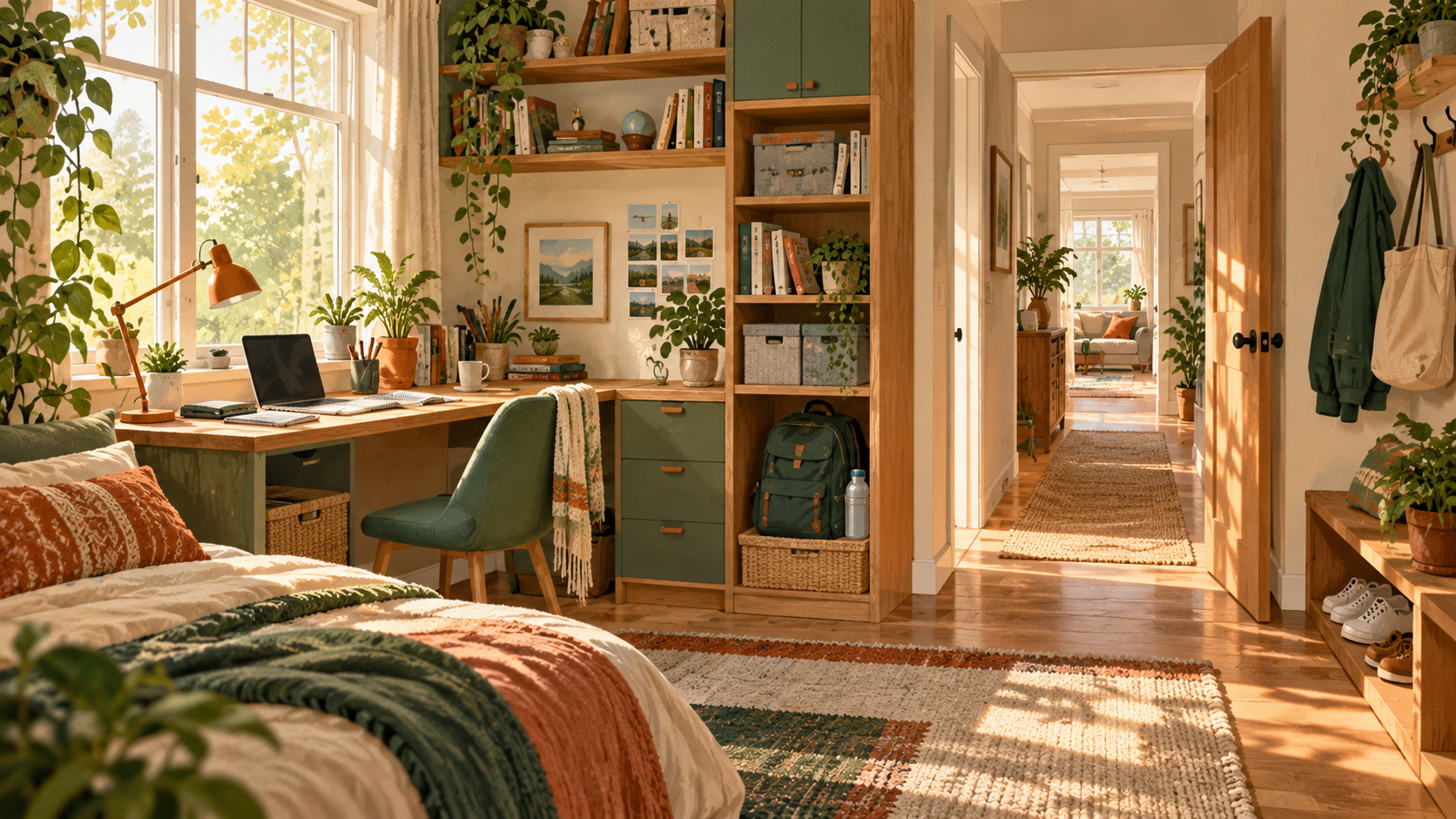
Where Should Things Go? Feng Shui, Storage and Spatial Order
Unison Spatial Order Research|由心空间秩序研究 · Part 3
Master You · 15 October 2026 · New Zealand edition

A desk may be useful beside a window and awkward beside a doorway. The object has not changed, but its relationship with light, movement and people has. Unison Spatial Order Research uses such everyday examples to ask how a room supports the activities within it.
Begin with use, people and movement
Before choosing a location, ask who uses the object, how often they need it and what else happens nearby. A young child and a teenager may need different shelf heights. A shared dining table has to change between meals and homework. Storage that suits one person can create extra work for someone else.
Sketch doors, windows, large furniture and walking routes. Include the space needed to pull out a chair and open cupboard doors. Keep exits and necessary access clear. Ask an adult for help with heavy furniture; do not climb shelves or alter electrical fittings as part of a home experiment.
A cultural language for relationships
Unison Ten Dynamics — 生、帮、克、泄、耗、刑、冲、合、破、穿 — is proposed here as a traditional-cultural research model. It invites questions about support, cooperation, constraint, release, consumption and the effects of relationships. These are exploratory applications, not established laws of building performance or human behaviour.
For instance, a lamp may help a reading task, while glare from its position may make the same task uncomfortable. You might use the model to describe those relationships, but first record what the reader actually reports. The cultural interpretation comes after the observation and should be labelled as interpretation.
One object can have several effects
A storage unit can hold books and also narrow a route. A screen can create privacy and also reduce useful daylight. Calling either object simply good or bad misses the different effects. Ask, “Helpful for whom, for which activity, at what time, and with what trade-off?”
Do not force each observation into one of the ten categories. A basic description may be more useful than a complicated label. If a term has several meanings in your study group, write down the meaning you used. Stable definitions make later comparison possible.
Arrange the return journey
People often plan where an object will be stored but forget how it gets back there. A sports bag kept behind several boxes may never return to its intended place. A charging spot on a main work surface may invite loose cables. Try a place that is easy to reach, easy to see and suitable for the person using it.
Discuss the change with everyone affected. A tidy room that leaves one family member unable to find their belongings is not a shared success. Use labels, a simple drawing or a short trial rather than moving another person's possessions without telling them.
Test a layout for one week
Choose one change, such as moving a basket closer to the place where school materials are unpacked. Before the change, record three ordinary problems: a blocked route, time spent searching and difficulty putting things away. Use counts or short notes instead of a vague score for “good energy.”
After a week, ask each user what changed. Did the basket help, or did it become another obstacle? Was the original problem actually caused by too many items, conflicting schedules or missing information? Keep unsuccessful trials in the record. They help you choose the next adjustment.
What leaves the room needs a destination
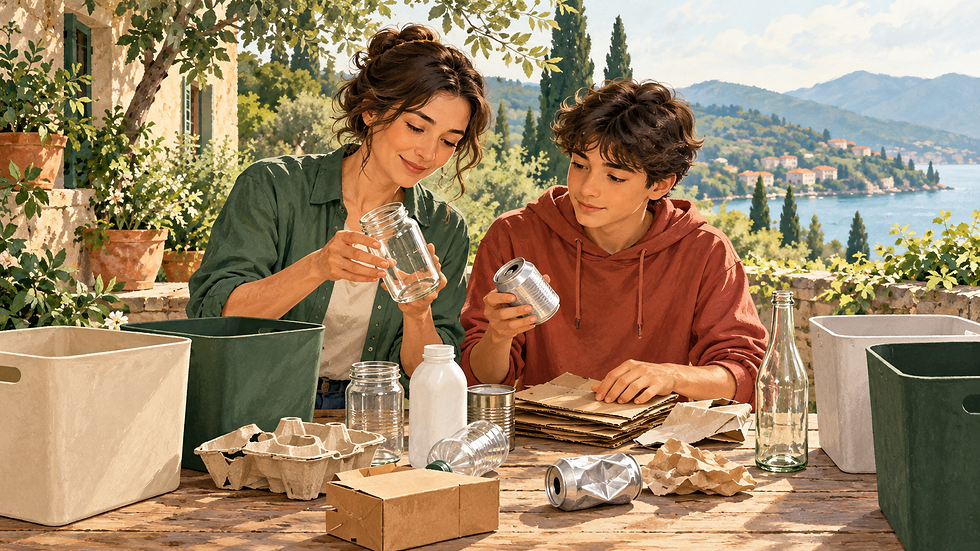
Rearranging can uncover broken or unwanted items. Keep them separate from the layout experiment and decide how they should leave the home responsibly. Do not treat the general bin as the automatic destination for everything you no longer want.
This New Zealand edition follows the national household kerbside recycling materials standard, introduced on 1 February 2024. Check your council for the collection service, dates and any separate glass collection at your address; bin colours alone are not enough.
Food scraps and garden collections are separate from ordinary recycling and depend on local services. Do not assume that compostable packaging or a green-coloured bin is suitable. Auckland examples should be checked against Auckland Council; elsewhere use the relevant council.
A room is a relationship, not a photograph
The most useful layout is one people can live with, maintain and revise. Cultural ideas can help generate questions. Everyday observations, shared decisions and practical checks help determine whether a change works.
Research and publication note
Five Elements and Unison Ten Dynamics are traditional-cultural and exploratory research models in this series, not modern material science or validated causal laws. Activities are suggestions, not completed studies or guaranteed outcomes. Illustrations are AI-generated fictional scenes, not evidence from clients or actual participants.
Sources and local checks
Local guidance checked 15 October 2026. Recheck the linked official service before acting; this article is a learning guide, not a council notice.


Comments