

When Does an Object Become Waste? Reuse, Decomposition and Value

Unison Spatial Order Research|由心空间秩序研究 · Part 6
Master You · 15 October 2026 · New Zealand edition

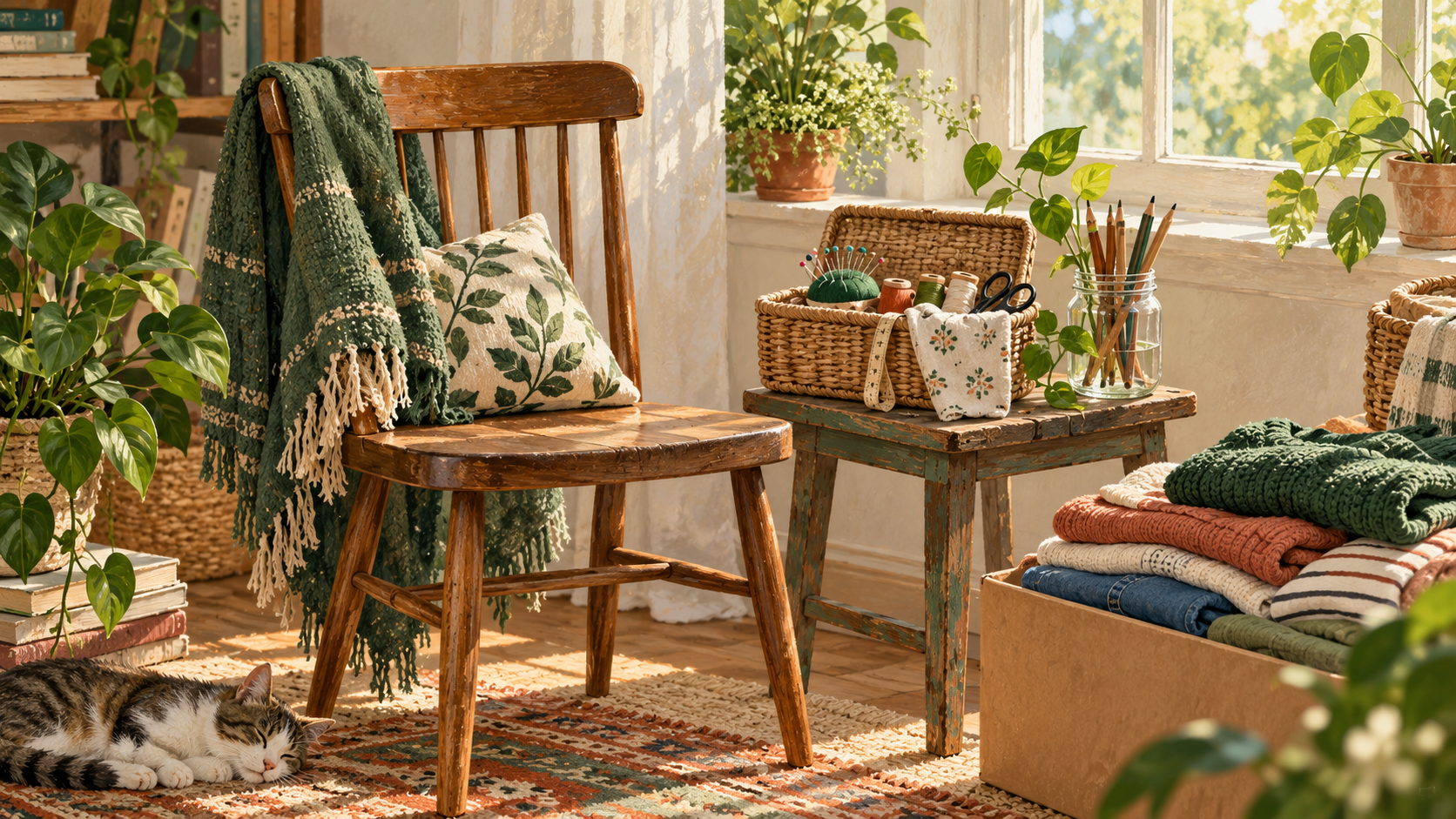
A chair that is in the way in one home may be exactly what another household needs. That does not mean every unwanted object should be stored forever. It means value depends partly on condition, purpose, the next user and the practical route between them.
Unison Spatial Order Research asks us to look at this relationship before choosing a destination. The question is not simply, “Is it rubbish?” It is, “What can responsibly happen next?”
Different routes do different work
Reuse keeps an item in use, whether in its original role or a new one. Repair aims to restore usefulness. Recycling sends suitable material into a processing system. Composting is a biological treatment carried out under particular conditions. Disposal is a separate destination when other suitable routes are unavailable.
These words are not interchangeable. Turning a jar into a pencil holder is reuse; sending an accepted bottle through collection is recycling. A repair that needs unavailable parts may not be feasible. Write down the real conditions instead of assuming that an attractive idea is already a working solution.
Do not let a label make the decision
“Biodegradable,” “compostable” and “recyclable” need context. A claim about breakdown does not tell you that an item belongs in a household compost, a garden bin or a kerbside recycling collection. Check the product information and the receiving facility's accepted list.
Nor does origin settle everything. A plant-based material may still need a specific processing route. A traditional Earth or Wood classification cannot establish how quickly something decomposes, what remains afterwards or whether a local service accepts it. Those are material and operational questions requiring their own evidence.
Avoid giving clutter a new name
A “future reuse” cupboard can become a place where decisions stop. Before keeping a spare jar or broken object, name its intended use, who will use it and when. If there is no realistic plan, compare another destination. Keeping fewer useful items can be more practical than holding every possible resource.
Donation also needs a receiving person or organisation willing to accept the item. Check condition and acceptance before dropping it off. Passing on an unusable object can transfer work and disposal costs to someone else. A respectful handover includes an honest description, not a claim that every second-hand item is automatically helpful.
A one-object decision study
Choose one safe item you planned to remove. Record its condition and current use. List the practical requirements for repair, reuse, passing it on, recycling and disposal. Compare likely time, effort and any known costs. Do not invent a carbon saving when you have not calculated it using an appropriate method.
Make the decision, then check what actually happened. Was the repair completed? Did the next user collect the item? Did the receiving service accept it? A plan that was never carried out should be recorded as a plan, not a completed environmental benefit.
The local system still matters
This New Zealand edition follows the national household kerbside recycling materials standard, introduced on 1 February 2024. Check your council for the collection service, dates and any separate glass collection at your address; bin colours alone are not enough.
Food scraps and garden collections are separate from ordinary recycling and depend on local services. Do not assume that compostable packaging or a green-coloured bin is suitable. Auckland examples should be checked against Auckland Council; elsewhere use the relevant council.
Where Five Elements can open a discussion
Master You uses Five Elements as a cultural research language for origin, form, function and transformation. A wooden object, a finished glass container and flowing water can prompt different questions. These interpretations do not measure composition or prove a processing outcome.
Similarly, Unison Ten Dynamics can help a group discuss support, constraint or consumption within a particular relationship. State what you observed first, then name the interpretation. Do not turn a symbolic description into a verdict about a person's character or future.
Value changes over time
The same object can be treasured, neglected, repaired and useful again. Its next chapter depends on decisions and real opportunities. A good household system makes those decisions visible: use it, plan a feasible repair, find an accepting user, or choose the appropriate collection route. The aim is a home that works and a handover that makes sense.
Research and publication note
Five Elements and Unison Ten Dynamics are traditional-cultural and exploratory research models in this series, not modern material science or validated causal laws. Activities are suggestions, not completed studies or guaranteed outcomes. Illustrations are AI-generated fictional scenes, not evidence from clients or actual participants.
Sources and local checks
Local guidance checked 15 October 2026. Recheck the linked official service before acting; this article is a learning guide, not a council notice.



Comments